
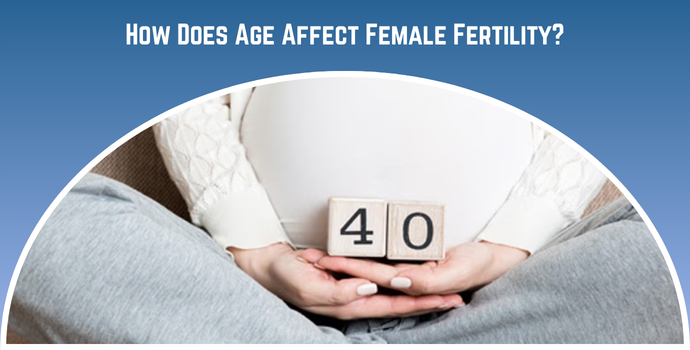
Female fertility peaks in the late 20s with 25-30% monthly conception chance and begins declining after 30 with a significant acceleration after 35. Aging reduces both egg quantity and quality increasing risks of miscarriage and chromosomal abnormalities. By 40 the monthly pregnancy chance drops below 5% per cycle.
According to Dr. Hrishikesh Pai, renowned IVF Doctor in India, “Age is the single biggest factor in fertility and no amount of healthy living fully compensates for the biological decline that starts after 32.”
How does age reduce egg quality and quantity?
Here’s how the numbers look. 1-2 million eggs at birth. 300,000 by puberty. Steady decline after that with things speeding up after 32 and dropping even faster after 37. The eggs that stick around get worse too with aneuploidy going from 20% at 30 to over 80% by 42.
- Egg Reserve Decline: A fetus at 20 weeks has 6-7 million eggs but by birth only 1-2 million are left and by puberty that’s down to 300,000 and the drop gets steeper after 32 then steeper again after 37 with roughly 1,000 remaining when menopause hits
- Chromosomal Abnormalities: Meiotic spindle function gets worse as eggs age and that means more DNA errors during cell division. Aneuploidy accounts for 65-75% of early pregnancy failures and the rates climb from 20% at age 30 to over 80% by 42
- Miscarriage Risk: Early 30s and about 1 in 10 pregnancies miscarry. By 40-44 that number is 1 in 3. The reason is the same every time which is chromosomally abnormal embryos that can’t develop past the first few weeks
- Hormonal Shifts: FSH climbs and AMH drops as eggs run out and that combination means the ovaries need more stimulation to respond whether it’s natural ovulation or fertility treatment drugs and older patients end up on higher medication doses because of it
Conception chance per month goes from 25-30% in the 20s to under 5% by 40 and more about what can be done is on the IVF treatment page.
What fertility options exist for women over 35?
The numbers tell the story. IVF under 35 gives 40-50% live births per cycle. At 38-40 that’s 20-26%. Past 40 it drops below 15%. Donor eggs from younger women sit at 51% no matter how old the recipient is. And eggs frozen before 35 keep their younger quality for whenever they get used.
- IVF with Own Eggs: Under 35 you get 40-50% live birth per cycle and at 38-40 it drops to 20-26% and after 40 below 15%. IVF treatment can’t undo what age does to an egg. The egg’s age decides whether the embryo is normal not the uterus
- Egg Freezing: Freeze at 34 or younger and the pregnancy rates later are significantly better than freezing at 38 or older. What matters is how old the eggs were when they went into the freezer not how old you are when you thaw them
- Donor Eggs: After 40 your own eggs give under 15% per IVF cycle but younger donor eggs give 51%. That’s five times the success rate and the reason is simple. Donor egg quality determines chromosomal health of the embryo
- PGT-A Testing: Test embryos for chromosome count before transfer and even older women with a handful of normal embryos get pregnancy rates similar to younger women. More about egg freezing timing is covered separately
Every year past 35 makes things harder across every treatment type so earlier is always better. How age overlaps with PCOS is in this guide on getting pregnant with PCOS after 30.
Why Choose Dr. Hrishikesh Pai?
His team runs complete hormonal panels and imaging and tubal assessments before recommending any treatment. He has delivered keynote lectures at FIGO World Congress and been featured on BBC World Service for his work in egg freezing and reproductive medicine. Call +91-98200 57722 to book your consultation.
Frequently Asked Questions
At what age does female fertility start declining?
Fertility begins declining after 30 with a significant acceleration after age 35.
What is the monthly pregnancy chance at age 40?
Less than 5% per cycle compared to 25-30% in the 20s.
Does IVF overcome age-related fertility decline?
IVF improves chances but cannot reverse egg quality decline with success dropping after 40.
Is egg freezing effective after 35?
Eggs frozen before 35 have significantly higher pregnancy rates than those frozen later.
References
- Age-related fertility decline – National Library of Medicine
- Oocyte quality and aging – National Library of Medicine