
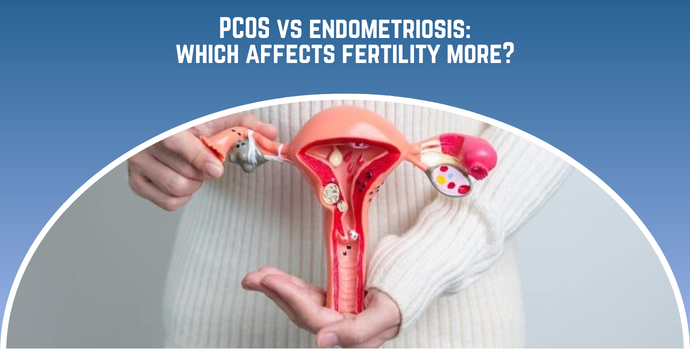
PCOS is a hormonal disorder affecting 8-20% of reproductive age women that disrupts ovulation while endometriosis affects approximately 10% causing structural damage through inflammation and scarring. Up to 80% of PCOS women have ovulatory dysfunction and 30-50% of endometriosis patients experience subfertility with 71.5% of infertile PCOS women also having unrecognized endometriosis.
According to Dr. Hrishikesh Pai, renowned IVF Doctor in India, “PCOS and endometriosis damage fertility through opposite pathways but both respond well to treatment when caught early enough.”
| Factor | PCOS | Endometriosis |
| Prevalence | 8-20% of reproductive women | ~10% of reproductive women |
| Primary Mechanism | Hormonal (blocks ovulation) | Structural (inflammation and scarring) |
| Subfertility Rate | Up to 80% ovulatory dysfunction | 30-50% experience subfertility |
| Diagnosis | Blood tests and ultrasound | Laparoscopy (surgical) |
| Pain Pattern | Less pelvic pain | Severe pelvic pain common |
| IVF Response | Good egg numbers but quality varies | Fewer eggs but implantation is main barrier |
| First Line Treatment | Ovulation induction (Letrozole/Clomid) | Laparoscopic excision then IVF if needed |
How does PCOS affect your ability to get pregnant?
PCOS disrupts fertility primarily through anovulation caused by elevated androgens and insulin resistance. Higher than normal LH to FSH ratios prevent follicles from maturing and releasing eggs. Irregular ovulation makes timed conception difficult even when eggs do release occasionally.
- Anovulation: Androgens are too high. Follicles start growing but none of them finish the job. No mature egg gets released and without that there’s nothing for sperm to fertilize. This alone accounts for infertility in 70-80% of PCOS cases
- Insulin Resistance: Roughly 70% of women with PCOS have it. What happens is high insulin pushes androgen levels even higher and that shuts down ovulation further. So the hormones keep making each other worse month after month until something breaks the cycle
- Egg Quality: Eggs that develop in a hyperandrogenic environment don’t fertilize as well in the lab. Women going through fertility treatment for PCOS sometimes need adjusted stimulation protocols because the standard approach pulls out quantity but not always quality
- Endometrial Issues: No ovulation means no progesterone. No progesterone means the uterine lining just keeps building without shedding properly. That unopposed estrogen exposure reduces implantation rates by 10-15% even when a chromosomally normal embryo goes in
Letrozole shows a 27.5% live birth rate compared to 19.1% with Clomiphene for PCOS ovulation induction. More about treatment options is on the female infertility treatment page.
How does endometriosis damage fertility?
Endometriosis creates chronic pelvic inflammation that damages eggs and fallopian tubes and changes the uterine environment. Staging runs from I to IV with stage III and IV doing the most structural harm. Even stage I-II drops monthly fecundity from 15-20% down to 2-10%.
- Tubal Damage: Endometrial tissue lands on the fallopian tubes and forms adhesions. Those adhesions physically block egg transport. Stage III-IV cases can lose function in both tubes entirely and at that point IVF treatment becomes the only realistic option left
- Ovarian Endometriomas: Chocolate cysts eat into healthy ovarian cortex. Bilateral endometriomas cut AMH levels by 30-50% which means significantly fewer eggs show up during IVF stimulation. The damage to reserve is permanent even after surgical removal
- Inflammatory Environment: IL-6 and TNF-alpha levels spike in the peritoneal fluid. Those cytokines are toxic to sperm motility and egg quality and embryo development. Fertilization and implantation rates drop even when the tubes look structurally fine on imaging
- Implantation Failure: Progesterone receptors in the endometrium get altered by the disease. The lining becomes resistant to embryo attachment. Studies show implantation rates run 15-20% lower in endometriosis patients compared to age-matched women without it
Laparoscopic excision improves natural conception by 40-50% in stage I-II cases within 12 months of surgery. How both conditions overlap is discussed in this guide on getting pregnant with PCOS after 30.
Why Choose Dr. Hrishikesh Pai?
His team runs complete hormonal panels and imaging and tubal assessments before recommending any treatment. He has delivered keynote lectures at FIGO World Congress and been featured on BBC World Service for his work in egg freezing and reproductive medicine. Call +91-98200 57722 to book your consultation.
Frequently Asked Questions
Which condition causes more infertility PCOS or endometriosis?
Both cause significant infertility through different mechanisms and severity varies per patient.
Can you have PCOS and endometriosis at the same time?
Yes research shows 71.5% of infertile PCOS women also had unrecognized endometriosis.
Is IVF successful for PCOS patients?
Yes PCOS patients generally respond well to IVF with good egg numbers per cycle.
Does endometriosis reduce egg reserve?
Yes ovarian endometriomas destroy healthy tissue and lower AMH levels over time.
References
- PCOS and endometriosis co-occurrence – National Library of Medicine
- Endometriosis in women with PCOS – Fertility and Sterility