
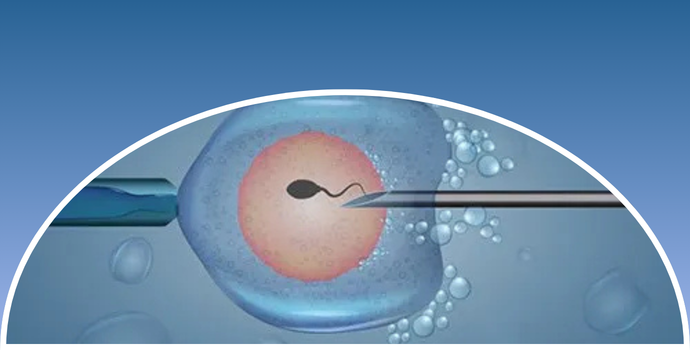
ICSI or Intracytoplasmic Sperm Injection is an advanced assisted reproductive technology used within an IVF cycle where a single sperm is injected directly into a mature egg to achieve fertilization in the lab. It is primarily used to treat severe male factor infertility including low sperm count and poor motility and abnormal morphology. ICSI bypasses natural fertilization barriers completely requiring only one viable sperm per egg. The technique is now used in over 70% of IVF cycles worldwide with fertilization rates between 70-80% of injected mature eggs.
According to Dr. Hrishikesh Pai, renowned IVF Doctor in India, “ICSI removes the biggest barrier in male infertility because you only need one healthy sperm per egg to achieve fertilization.”
How does ICSI work during an IVF cycle?
The female partner goes through the same stimulation and egg retrieval as conventional IVF. ICSI only changes what happens inside the lab after eggs are collected. An embryologist picks one sperm under high magnification and injects it into each mature egg using a glass needle thinner than a human hair.
- Egg Preparation: They strip the surrounding cells off each retrieved egg first. Only mature ones at MII stage make the cut. Immature eggs won’t fertilize no matter what you do with them so those get set aside
- Sperm Selection: The embryologist looks through the sample under the microscope and picks one sperm that looks normal and moves right. Immobilizes it first. Then loads it into a needle so thin you can barely see it
- Microinjection: That single sperm goes straight into the egg cytoplasm. Takes a few seconds per egg. The embryologist does this one by one for every mature egg collected and some clinics process 10 to 15 eggs in a single sitting
- Fertilization Check: About 16 to 18 hours later the embryologist checks each egg for two pronuclei which means fertilization worked. Not every egg makes it. But 70-80% is what most good labs consistently hit
Once fertilization is confirmed embryos grow for 3 to 5 days before transfer. You can read more about the full procedure on the ICSI treatment page.
When do doctors recommend ICSI over conventional IVF?
ICSI is recommended when sperm quality or quantity is too low for standard IVF fertilization. About 40-50% of infertility cases involve a male factor component. Previous IVF cycles with poor or zero fertilization even with normal-looking sperm also warrant switching to ICSI.
- Low Sperm Count: Under 5 million motile sperm in the sample and your doctor is going to push for ICSI. Regular IVF needs way more than that to work and at those numbers you’re basically gambling with each egg
- Poor Motility: Sperm that can’t swim properly will never reach an egg on their own. ICSI takes that whole journey out of the equation. The embryologist puts the sperm exactly where it needs to be and movement doesn’t matter anymore
- Surgical Sperm: Men with azoospermia get sperm pulled out through TESA or micro-TESE procedures. Those samples have tiny numbers and limited movement. Only way to use them is through ICSI and couples facing male infertility treatment end up here more often than you’d think
- Previous Failure: First IVF cycle produced eggs but nothing fertilized. Nobody knows exactly why. Your doctor won’t take that chance again and switches to ICSI for round two regardless of what the semen analysis says
ICSI has given men with severe sperm issues a real shot at biological fatherhood that didn’t exist 25 years ago. How repeated failures are managed is covered in this guide on failed embryo transfer.
Why Choose Dr. Hrishikesh Pai?
His team runs complete hormonal panels and imaging and tubal assessments before recommending any treatment. He has delivered keynote lectures at FIGO World Congress and been featured on BBC World Service for his work in egg freezing and reproductive medicine. Call +91-98200 57722 to book your consultation.
Frequently Asked Questions
What is the success rate of ICSI fertilization?
ICSI achieves fertilization in about 70 to 80% of injected mature eggs.
Is ICSI more expensive than regular IVF?
Yes ICSI adds a separate lab fee on top of the standard IVF cost.
Can ICSI work with very low sperm count?
Yes ICSI needs only one healthy sperm per egg to achieve fertilization.
Does ICSI increase the chance of twins?
Twin risk depends on embryos transferred not the fertilization method used.
References
- ICSI procedure overview – National Library of Medicine
- Male infertility and ART – World Health Organization