
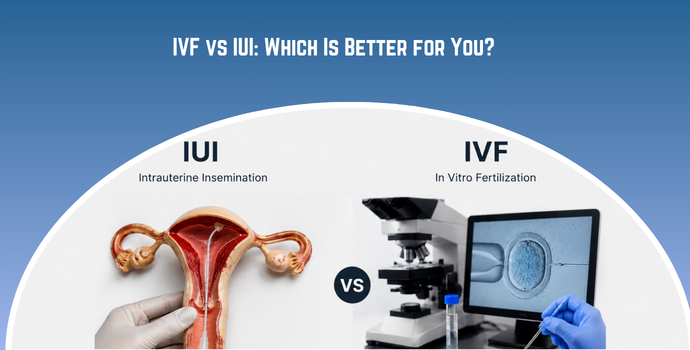
Neither one is automatically better. They solve different problems at different price points with very different levels of involvement. IVF is more effective per cycle, that part is not up for debate. Success rates are considerably higher. But IUI is simpler, far less invasive, and costs a fraction of what IVF does. For plenty of couples IUI gets the job done. For others it was never going to work, and IVF is the only real option from the start. The right answer depends on the diagnosis, the woman’s age, how long the couple has been trying, and what the semen analysis looks like.
According to Dr. Hrishikesh Pai, one of the leading IVF Doctor in India, “I don’t push couples toward IVF when IUI still has a fair shot. But I also won’t waste someone’s time running six IUI cycles when the numbers clearly say they need IVF. It is about reading the situation correctly.”
What is the real difference between IVF and IUI?
Both are fertility treatments but that is about where the overlap stops. IUI keeps things inside the body. IVF moves the critical steps into the lab. The table below breaks down what actually changes between the two.
|
Factor |
IUI |
IVF |
|
How it works |
Sperm placed in uterus, fertilisation happens naturally |
Eggs retrieved, fertilised in lab, embryo transferred back |
|
Success rate |
10-20% per cycle |
40-60% per cycle |
|
Cost per cycle |
Much lower |
Significantly higher |
|
Medications |
Minimal, oral tablets or trigger shot |
Daily hormone injections for 10-14 days |
|
Procedure |
Quick insemination, no sedation needed |
Egg retrieval under sedation + embryo transfer |
|
Time commitment |
1-2 monitoring visits per cycle |
10-14 days of scans, blood draws, procedures |
|
Best suited for |
Mild male factor, unexplained, PCOS, younger age |
Blocked tubes, severe male factor, failed IUI, older age |
The numbers look like IVF wins every time, and per cycle it does. But IUI cycles are faster, cheaper, and easier on the body. For the right diagnosis, three IUI cycles can match the cumulative odds of one IVF round at a fraction of the cost. The details of how IUI works, timing, preparation and what to expect are covered on the IUI treatment page.
How do you decide which one is right?
There is no universal flowchart, but some situations point clearly in one direction.
- Age and ovarian reserve: Under 35 with open tubes and reasonable sperm numbers, IUI is a sensible starting point. Over 38, or when ovarian reserve is dropping, time starts to matter a lot. Each month counts. IVF gets you to higher odds faster, and waiting through multiple IUI cycles may cost you eggs you cannot get back.
- The diagnosis: Unexplained infertility, mild male factor, ovulation trouble like PCOS, these are all situations where IUI has a real chance. Blocked tubes, severe male factor, advanced endometriosis, those skip straight to IVF because IUI physically cannot work around the problem.
- Failed IUI cycles: Most clinics say three to four. If pregnancy has not happened after that many attempts, continuing is unlikely to change anything. That is usually when IVF enters the conversation, and it should.
- More than one issue going on: When there is a sperm concern and a mild tubal factor and the woman is 36, stacking IUI on top of those odds does not add up. IVF gives you more control over each step, which matters when multiple things are working against you.
Ovarian reserve changes the picture for IUI more than people expect. This piece on IUI with low AMH gets into when it still makes sense and when it does not.
Why choose Dr. Hrishikesh Pai?
Dr. Hrishikesh Pai has been a fertility specialist for over 40 years. MD, FRCOG (UK-HON), MSc (USA), FCPS, FICOG. He founded the Bloom IVF Group and the count is past 25,000 IVF cycles across eight centres. Lilavati Hospital Mumbai. DY Patil Navi Mumbai. Fortis in Delhi, Gurgaon and Mohali. His labs run Life Whisperer AI to help pick the strongest embryos.
He does not default to the expensive option. Couples get a proper workup first, hormone panels, imaging, semen analysis, and the recommendation comes after. If IUI has a realistic shot, that is where he starts. If it does not, he says so.
Book a Consultation with Dr. Hrishikesh Pai If You Want to know whether IVF or IUI is the right fertility path for you.
Frequently Asked Questions
How many IUI cycles should you try before IVF?
Most doctors recommend 3 to 4. If pregnancy has not happened by then, moving to IVF is usually the next step.
Is IUI painful compared to IVF?
IUI is quick and mostly painless. IVF involves daily injections and egg retrieval under sedation, so it asks quite a bit more.
Can IUI work with low sperm count?
It can with mild male factor. If the total motile sperm count is very low, IVF with ICSI is more effective.
Is IVF more successful than IUI?
Yes, per cycle. IVF success rates run 40 to 60 percent depending on age, while IUI is 10 to 20 percent. But IUI is tried first when the odds are reasonable.
References
- Should IUI replace IVF as first-line treatment for unexplained infertility? A literature review – National Library of Medicine (PMC)
- IVF versus IUI with ovarian stimulation for unexplained infertility: a collaborative individual participant data meta-analysis – National Library of Medicine (PMC)