
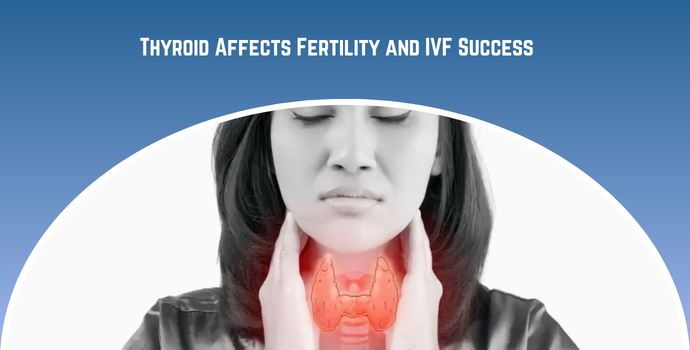
Thyroid hormones regulate ovulation, implantation and early pregnancy. When thyroid function is off, even slightly, fertility is affected. Hypothyroidism is the most common thyroid condition in women of reproductive age and frequently goes undetected because the standard lab reference range is wider than what fertility medicine needs. Most IVF clinics now use a TSH cutoff of 2.5 mIU/L, lower than the standard lab range, because even mild elevation reduces IVF success rates.
According to Dr. Hrishikesh Pai, a leading IVF Doctor in India, “Thyroid function is one of the first things we check in any fertility workup. A TSH that looks normal on a standard report can still be too high for an IVF cycle. The fertility threshold is different from the general population threshold.”
How Does Thyroid Dysfunction Affect Ovulation and Fertility?
The disruption isn’t confined to one part of the cycle. Thyroid hormones touch the reproductive axis at multiple points simultaneously.
Ovulation: When TSH is elevated, prolactin tends to rise with it. That rise disrupts GnRH signalling. The result is irregular cycles, delayed ovulation or no ovulation at all.
Egg quality: Thyroid hormone receptors sit inside granulosa cells and oocytes directly. Low thyroid function interferes with how follicles develop during stimulation and affects the quality of eggs produced.
Endometrial receptivity: Subclinical hypothyroidism has been associated with thinner endometrial lining and a shifted implantation window. The embryo arrives, but the lining isn’t ready.
Early pregnancy loss: In the first trimester, the foetus has no functioning thyroid. It relies entirely on maternal thyroid hormone. Untreated hypothyroidism at this stage significantly raises miscarriage risk.
Thyroid autoimmunity: This is the one that surprises people most. Elevated TPOAb or TgAb antibodies reduce clinical pregnancy rates and increase miscarriage rates in IVF even when TSH is perfectly normal. The immune dysregulation affects implantation independently of hormone levels.
Thyroid is one piece of a larger picture. Understanding why IVF fails across all the contributing factors is where the investigation has to start before any protocol gets adjusted.
What TSH Level Is Safe for IVF and How Is Thyroid Managed During Treatment?
The general population TSH reference range runs from 0.4 to 4.5 mIU/L depending on the lab. That range was not designed with IVF in mind. Reproductive endocrinologists work to a different target, below 2.5 mIU/L before a cycle starts, and that target is maintained through early pregnancy.
Subclinical hypothyroidism: TSH sits between 2.5 and 4.5 with normal free T4. Published IVF data consistently shows lower pregnancy rates and higher miscarriage rates in this group compared to women with TSH below 2.5. Levothyroxine brings TSH into the fertility range before stimulation begins.
Overt hypothyroidism: TSH above 4.5 with low free T4. Levothyroxine is not optional here. No IVF cycle should start until TSH is properly controlled.
Hyperthyroidism: Excess thyroid hormone suppresses ovulation and increases miscarriage risk through a different mechanism. IVF gets deferred until antithyroid medication brings function back to a stable level.
Thyroid antibodies with normal TSH: The evidence is still evolving, but low-dose levothyroxine in TPOAb positive women has shown reduced miscarriage rates in published studies. Most reproductive endocrinologists are now treating this group rather than watching and waiting.
Monitoring during IVF: Ovarian stimulation raises oestrogen, which increases thyroxine-binding globulin. That can push TSH up mid-cycle. Women already on levothyroxine may need a dose adjustment during stimulation. TSH gets rechecked in early pregnancy regardless of where it sat before the cycle.
For women working through thyroid-related fertility questions, antibody testing alongside TSH should be part of the standard workup, not an add-on. On the male side, the guide on sperm DNA fragmentation covers one of the most commonly missed factors investigated in parallel.
Why choose Dr. Hrishikesh Pai?
Dr. Hrishikesh Pai has been a fertility specialist for over 40 years. MD, FRCOG (UK-HON), MSc (USA), FCPS, FICOG. He founded the Bloom IVF Group from the ground up, now past 25,000 cycles across eight centres in Mumbai, Navi Mumbai, Delhi, Gurgaon and Mohali. The labs run Life Whisperer AI for embryo grading because manual assessment alone has limits.
Thyroid assessment at Bloom IVF goes beyond a standard TSH. Antibody screening, free T4 and cycle-specific monitoring are part of the pre-IVF workup. TSH targets are set to fertility standards, not general population reference ranges.
Concerned about thyroid and its impact on your fertility?
Frequently Asked Questions
What TSH level is considered normal for IVF?
Most fertility clinics target TSH below 2.5 mIU/L before starting an IVF cycle. This is lower than the standard laboratory reference range used for the general population.
Can thyroid problems cause IVF failure?
Yes. Both overt and subclinical hypothyroidism are associated with lower implantation rates, higher miscarriage rates and reduced live birth rates in IVF. Thyroid antibodies can also affect outcomes even when TSH is normal.
Does thyroid treatment improve IVF success?
In overt hypothyroidism, yes. For subclinical hypothyroidism, levothyroxine to bring TSH below 2.5 mIU/L has been associated with improved outcomes in several published studies.
Should thyroid antibodies be tested before IVF?
Yes. TPOAb and TgAb testing is recommended even when TSH is normal, because antibody positivity independently affects implantation and miscarriage risk.
References
Impact of Thyroid Autoimmunity on In Vitro Fertilization Outcomes and Fetal Weight – PMC, National Library of Medicine
The Influence of Pre-IVF Day 2 TSH Levels on Treatment Success and Obstetric Outcomes – PMC, National Library of Medicine