
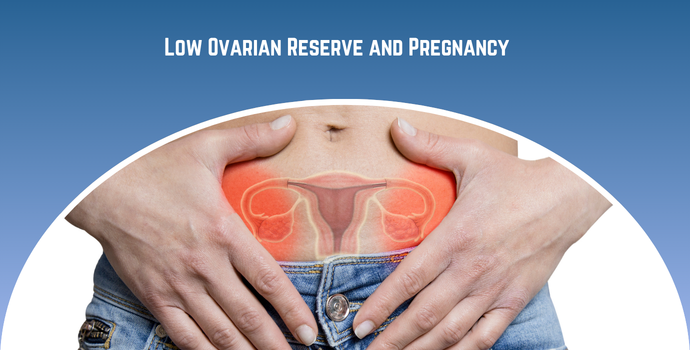
Yes, but the picture is more nuanced than the number suggests. Low ovarian reserve means fewer eggs are left, not that conception is impossible. Egg quality drives outcomes far more than quantity, and quality is primarily determined by age. A 32-year-old with AMH of 0.6 ng/mL is in a very different position from a 42-year-old with the same result. The diagnosis is a reason to act quickly, not a reason to stop.
According to Dr. Hrishikesh Pai, a leading IVF Doctor in India, “Low ovarian reserve doesn’t mean zero chance of pregnancy. It means time is working against you and acting quickly makes a real difference.”
What Factors Determine Pregnancy Chances With Low Ovarian Reserve?
Reserve tells you how many eggs are left. What it doesn’t tell you is whether those eggs can lead to pregnancy. Several other factors matter more.
Age comes first: Under 35, even very low AMH rarely closes the door entirely. The eggs that remain tend to be better quality, and the numbers from IVF are meaningfully better than the same diagnosis a decade later.
AMH and AFC together, not AMH alone: AFC on ultrasound tells you how many follicles are visible and ready to respond. Combined with AMH, it gives a far more accurate read than either test separately.
Why the reserve is low: Surgical history, endometriosis, genetic causes, prior chemotherapy each affects the ovaries differently and responds differently to treatment. Two women with the same AMH number can have very different prognoses depending on cause.
Actual response to stimulation: The AMH number predicts response, it doesn’t determine it. Some women with AMH under 0.5 ng/mL still produce multiple usable eggs with the right protocol. The only way to know is to try.
One good embryo is enough: With low reserve, the goal shifts from retrieving many eggs to identifying the best one available. A single good-quality blastocyst is all it takes.
Women with confirmed low reserve should not delay. Early assessment and tailored planning under poor ovarian reserve treatment gives the most options while eggs are still available.
What Are the Treatment Options for Low Ovarian Reserve?
Treatment is not one-size-fits-all. Age, AMH, AFC and prior treatment history all shape what makes sense.
Timed intercourse with ovulation monitoring: A reasonable starting point for younger women with mild low reserve and regular ovulation. Avoids unnecessary intervention before simpler options are tried.
IUI with ovarian stimulation: Women under 40 with low reserve can achieve reasonable pregnancy rates through IUI before moving to IVF. Less invasive, lower cost per cycle.
IVF with modified protocol and growth hormone: High-dose gonadotropins combined with growth hormone is standard for poor responders. Mini-IVF used when conventional stimulation produces no response.
Egg accumulation across cycles: When only one or two eggs come per retrieval, banking embryos across multiple cycles before transfer increases cumulative live birth rates.
PRP intraovarian injection: Platelet-rich plasma injected into the ovary has shown improvements in AMH, AFC and IVF outcomes in published cohort data. Increasingly used when conventional approaches are exhausted.
Donor eggs: When own eggs are no longer viable, donor egg IVF removes ovarian reserve from the equation entirely. Success rates are high.
Uterine cavity health is assessed in parallel before any embryo transfer is planned. The guide on hysteroscopy before IVF explains why cavity assessment matters before the cycle starts.
Why choose Dr. Hrishikesh Pai?
Dr. Hrishikesh Pai has been a fertility specialist for over 40 years. MD, FRCOG (UK-HON), MSc (USA), FCPS, FICOG. He founded the Bloom IVF Group from the ground up, now past 25,000 cycles across eight centres in Mumbai, Navi Mumbai, Delhi, Gurgaon and Mohali. The labs run Life Whisperer AI for embryo grading because manual assessment alone has limits.
Poor ovarian reserve management at Bloom IVF is protocol-specific. Growth hormone, egg accumulation, PRP and donor egg options are all available and selected based on individual response, not a standard pathway.
Concerned about your ovarian reserve?
Frequently Asked Questions
Can I get pregnant naturally with low ovarian reserve?
Yes, particularly under 35. Low reserve reduces eggs available per cycle but does not prevent conception when ovulation is regular.
What AMH level is too low to get pregnant?
There is no absolute cutoff. Women with AMH below 0.1 ng/mL have conceived naturally and through IVF. Age and egg quality matter more than the number itself.
Does low ovarian reserve mean early menopause?
Not necessarily. Low reserve means fewer eggs remaining but does not predict when menopause will arrive or prevent pregnancy in the meantime.
How many eggs do you need for IVF with low ovarian reserve?
One good-quality blastocyst is enough. The focus shifts from collecting many eggs to identifying the best one available for transfer.
References
In Vitro Fertilization Outcome in Women With Diminished Ovarian Reserve – PMC, National Library of Medicine
Ovarian Reserve Parameters and IVF Outcomes in 510 Women With Poor Ovarian Response Treated With Intraovarian Injection of Autologous PRP – PMC, National Library of Medicine