
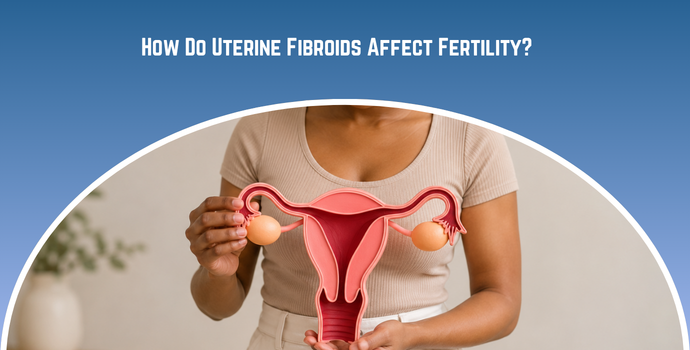
Uterine fibroids affect fertility primarily based on their size and location within the uterus, though the vast majority of women with fibroids experience no trouble conceiving or carrying a child. Fibroids are the most common tumours of the female reproductive tract, appearing in 20 to 50% of women of reproductive age. They serve as the sole cause of infertility in only 2 to 3% of cases. That number matters because it puts the risk in proportion. A fibroid diagnosis is not a fertility diagnosis.
According to Dr. Hrishikesh Pai, a leading IVF Doctor in India, “Most women with fibroids will conceive without any intervention at all. What we watch carefully is location. A fibroid sitting inside the cavity behaves very differently from one on the outer wall.”
Which Types of Fibroids Actually Affect Fertility?
Location does most of the work here. Size becomes relevant only when it’s large enough to distort cavity shape or cut blood supply to the lining.
| Fibroid Type | Location | Fertility Impact |
| Submucosal | Inside the uterine cavity | Highest impact, directly reduces implantation |
| Intramural | Within the uterine wall | Moderate impact if large or near cavity |
| Subserosal | On the outer uterine wall | Minimal impact, rarely affects fertility |
| Pedunculated | Attached by a stalk outside uterus | Generally no fertility impact |
Submucosal fibroids are the clearest problem. Pregnancy and live birth rates are consistently lower in women with cavity-distorting fibroids, and removing them has been shown to improve outcomes. Subserosal fibroids on the outer wall tend to leave fertility numbers unchanged their removal doesn’t improve IVF results either, which is why they’re usually left alone. Intramural fibroids sit in the middle of that picture. Small ones with no endometrial contact rarely interfere. Larger ones that press against the lining or choke local blood flow are a different story.
Why does location matter so much? The mechanisms still aren’t fully worked out, but cavity distortion, impaired endometrial perfusion, abnormal myometrial contractions in the luteal phase, and reduced embryo receptivity all show up in the published data. For women where cavity-distorting fibroids are confirmed, getting an early read on fibroid treatment options before starting any fertility cycle makes practical sense.
Can Fibroids Be Treated Before IVF and Does It Help?
Not automatically. Surgery isn’t always the right call, and the calculation is rarely straightforward.
Submucosal fibroids are the clearest case for removal Hysteroscopic resection is how it’s done — outpatient, no external cuts, and the evidence for improved pregnancy rates afterward is fairly consistent.
Intramural fibroids above 4 to 5 cm near the endometrium These are commonly addressed before IVF too, though the data supporting benefit is thinner than for submucosal cases.
Subserosal fibroids are usually left alone Unless sheer size is creating a mechanical problem elsewhere, removal doesn’t improve fertility outcomes and isn’t recommended.
Laparoscopic surgery or open myomectomy carries real tradeoffs Adhesions, wall thinning, cavity breach — these risks can complicate the IVF cycle that follows. One published cohort showed half of women achieved live birth after open myomectomy for multiple fibroids, but 26% needed a second hysteroscopic procedure before embryo transfer could be scheduled.
Low AMH alongside fibroids makes the decision more complex Reserve and cavity health pull on the IVF plan in different directions. Looking at normal AMH levels by age first helps establish what’s actually driving the fertility concern before any surgical decision gets made.
Why choose Dr. Hrishikesh Pai?
Dr. Hrishikesh Pai has been a fertility specialist for over 40 years. MD, FRCOG (UK-HON), MSc (USA), FCPS, FICOG. He built the Bloom IVF Group from the ground up, now past 25,000 cycles across eight centres in Mumbai, Navi Mumbai, Delhi, Gurgaon and Mohali. The labs run Life Whisperer AI for embryo grading because manual assessment alone has limits.
Fibroid management at Bloom IVF is decided case by case. Not every fibroid needs removal before IVF. When it does, the surgical approach, the timing relative to the cycle, and the post-operative cavity check are all planned together before treatment starts.
Book a Consultation with Dr. Hrishikesh Pai to understand how uterine fibroids affect fertility and to discover the best treatment options to protect your reproductive health and optimize your chances of pregnancy.
Frequently Asked Questions
Do fibroids always need to be removed before IVF?
No. Only fibroids that distort the uterine cavity or significantly impair blood flow are typically removed before IVF. Subserosal fibroids and small intramural fibroids that don’t touch the cavity are generally left alone.
Can I get pregnant naturally with fibroids?
Yes. Most women with fibroids conceive without any intervention. Fibroids are the sole cause of infertility in only 2 to 3% of cases.
How are fibroids detected before fertility treatment?
Transvaginal ultrasound is the standard first-line tool. Hysteroscopy gives a direct view inside the cavity and is used when ultrasound findings are unclear or before embryo transfer in IVF cycles.
Does fibroid size affect IVF success?
Size matters when it’s large enough to distort the cavity or compress endometrial blood supply. A 2 cm submucosal fibroid inside the cavity causes more problems than a 5 cm subserosal fibroid on the outer wall.
References
- PMC, National Library of Medicine– Uterine Fibroids and Infertility
- PMC, National Library of Medicine– Alterations in Uterine Hemodynamics Caused by Uterine Fibroids and Their Impact on In Vitro Fertilization Outcomes