
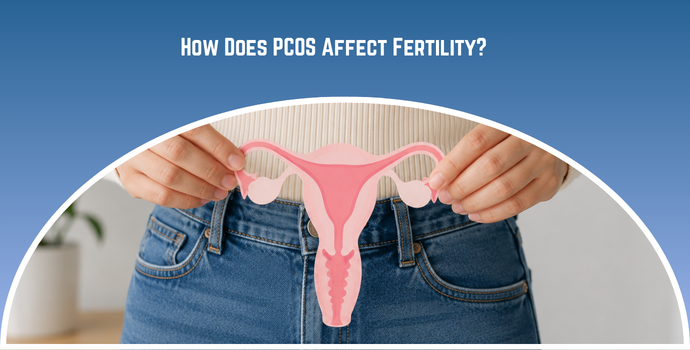
PCOS is the most common reason women struggle to ovulate, and ovulation is where the whole fertility question really lives. The hormones tip out of balance, the ovary stops releasing an egg on any predictable schedule, and a month with no egg is a month with no shot at pregnancy. Written down like that it sounds bleak. It usually isn’t. PCOS happens to be one of the more fixable causes of infertility. Sort out the ovulation, whether that takes weight changes, the right tablet, or IVF further down the line, and most women with PCOS go on to conceive.
According to Dr. Hrishikesh Pai, one of the best leading IVF Doctor in India, “PCOS is rarely the end of the road. The ovaries usually work fine. They just need the right signal to release an egg. Restore ovulation, and a large share of these pregnancies happen on their own.“
How does PCOS actually block pregnancy?
Trace it back far enough and it almost always lands on ovulation.
- Ovulation that won’t keep a schedule: This is the big one. Periods run late, skip a month or two, sometimes just disappear for a stretch. Fewer cycles a year means fewer eggs released, which means fewer real chances. Some cycles, no egg shows up at all.
- Too much androgen: PCOS runs high on male hormones. They interfere with the follicles, so eggs start to grow and then stall before any single one matures enough to release.
- Insulin resistance: It turns up in a lot of PCOS, slim women included. The body makes extra insulin, that nudges the ovaries into producing even more androgen, and round it goes. The cycle keeps feeding itself.
- The egg and the lining: When the hormone signalling is off, egg quality can dip and the uterine lining doesn’t always prime the way it should for an embryo. That is part of why early miscarriage is a bit more common too.
The ovaries themselves are usually fine, and that is the whole reason PCOS responds so well to care. There is more on the PCOS treatment page.
What actually helps women with PCOS get pregnant?
Think of it as a ladder. You start on the bottom rung and only climb if you have to.
- Weight and lifestyle: For plenty of women this is enough by itself. Lose 5 to 10 percent of body weight and ovulation often comes back on its own. It also makes whatever medication follows work better.
- Metformin and other insulin sensitisers: Useful when insulin resistance is doing the driving. Sometimes on its own, often paired with an ovulation tablet.
- Ovulation induction: Letrozole has overtaken clomiphene as the first-choice tablet for PCOS. Most women start ovulating on it within a cycle or two.
- Injectables, IUI, then IVF: When tablets don’t get there, low-dose hormone injections with IUI come next. IVF stays in reserve, for cycles that fail or when something else is going on as well. One caution worth knowing: PCOS ovaries can over-respond, so these cycles are watched closely.
Age doesn’t stop counting just because you have PCOS. The piece on getting pregnant after 30 with PCOS gets into how the timeline shifts.
Why choose Dr. Hrishikesh Pai?
Dr. Hrishikesh Pai has been doing this for over 40 years. MD and FRCOG (UK-HON) and MSc (USA) and FCPS and FICOG. He started the Bloom IVF Group and the count is past 25,000 IVF cycles across eight centers. Lilavati Hospital Mumbai and DY Patil Navi Mumbai and Fortis in Delhi and Gurgaon and Mohali. His labs run Life Whisperer AI for picking the best embryos.
Hormonal workups and imaging and tubal checks happen before anything gets recommended. FIGO World Congress keynote speaker. BBC World Service feature on egg freezing.
Book a Consultation with Dr. Hrishikesh Pai If You Want to know the best fertility treatment options for your journey.
Frequently Asked Questions
Can women with PCOS get pregnant naturally?
Yes. Many conceive naturally once ovulation becomes regular through weight loss and lifestyle changes.
What is the first-line fertility medicine for PCOS?
Letrozole is now first-line for ovulation induction in PCOS, ahead of clomiphene.
Does losing weight improve PCOS fertility?
Yes. Losing 5-10% of body weight can restore ovulation and improve the chance of conceiving.
Is IVF necessary for PCOS?
Usually not. IVF is considered only when ovulation induction and IUI fail, or when other infertility factors are present.
References
- Infertility management in women with polycystic ovary syndrome: a review – National Library of Medicine (PMC)
- An update of polycystic ovary syndrome: causes and therapeutics options – National Library of Medicine (PMC)