
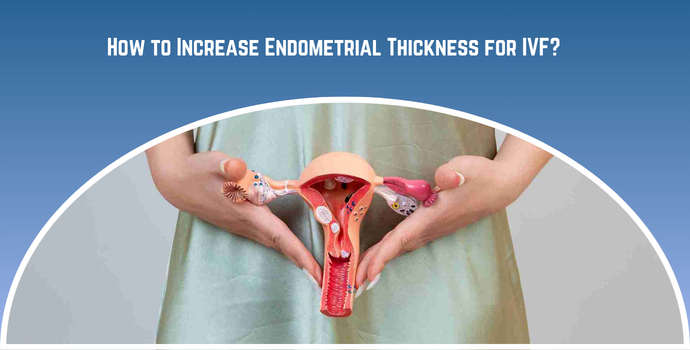
Increasing endometrial thickness for IVF involves a combination of medical treatments, lifestyle changes, and dietary adjustments aimed at improving uterine blood flow and estrogen levels. Optimal thickness is generally 8 to 12 mm before transfer. Key approaches include estrogen therapy, vaginal sildenafil, uterine PRP infusion, Vitamin E supplementation, and acupuncture. A lining below 7 mm significantly reduces implantation chances regardless of embryo quality.
According to Dr. Hrishikesh Pai, IVF specialist in Mumbai, “A thin endometrium doesn’t mean we stop, it means we look harder at why it’s happening, because the fix is usually there.”
What Causes a Thin Endometrium Before Transfer?
The reasons vary quite a bit. And that’s exactly why a one-size approach doesn’t work here.
- Low estrogen: Most common cause by far. Without enough estrogen in the system, the lining stalls at 5 to 6 mm even with extended stimulation — the body just doesn’t get the signal to keep growing.
- Scar tissue in the uterus: Prior D&C, hysteroscopy, or old infections can leave adhesions that physically block the lining from expanding the way it should across the cavity.
- Reduced blood supply: Honestly, this one gets missed more than it should. Doesn’t show on a regular scan — only a Doppler catches it, so it goes undiagnosed a lot.
- Chronic endometritis: Low-grade inflammation sitting quietly in the uterine cavity, often with zero symptoms, but the lining just won’t respond to hormones when it’s present.
Figuring out which of these is actually happening before starting any treatment is what matters. If your doctor has brought up a frozen embryo transfer cycle, get your lining properly assessed before that cycle starts.
What Are the Treatment Options for Thin Endometrium?
No single fix works for everyone.What you need depends entirely on what’s causing the problem.
- Estrogen therapy: First thing most doctors try, and rightly so. Oral, vaginal, or injectable the route depends on your case and how your body responds. Most patients see a measurable change within 10 to 14 days, with dose adjustments based on serial ultrasounds along the way.
- Uterine PRP infusion: Platelet-rich plasma goes directly into the uterine cavity to stimulate tissue regeneration. Used when estrogen alone hasn’t moved the needle. Still building its evidence base, but real-world outcomes are genuinely encouraging.
- Vitamin E and L-arginine: These work at the capillary level to improve blood supply to the uterus. Not a standalone fix, but as add-ons to hormonal therapy they make a measurable difference in the right patients.
- Vaginal sildenafil: Originally a cardiac vasodilator, used vaginally here to open up uterine blood vessels. Particularly useful when Doppler confirms poor perfusion as the underlying issue.
Some patients respond in one cycle. Others need two or three rounds, a hysteroscopy to clear adhesions, or a combination of everything above. It’s not always fast. For more on how hormonal preparation fits into this, the blog on ovarian stimulation in IVF covers it well.
Why Choose Dr Hrishikesh Pai?
Dr. Hrishikesh Pai founded the Bloom IVF Group and holds MD, FRCOG (UK-Hon), MSc (USA), FCPS and FICOG qualifications with over 40 years in reproductive medicine. He has personally completed more than 25,000 IVF cycles, and every Bloom IVF clinic now uses Life Whisperer AI for embryo selection.
Patients with thin endometrium don’t get a standard protocol. Each case gets a full Doppler assessment, hormonal panel, and uterine cavity evaluation before any transfer is confirmed. Most patients who’ve gone through that complete workup even after multiple failed cycles elsewhere have gone on to a response.
Want to explore safe and cutting-edge treatments for endometrial thickness? Get in touch with the leading IVF doctor in Mumbai and enhance your IVF success rate. Schedule your consultation now!
FAQs
What is the minimum endometrial thickness for embryo transfer?
Most specialists recommend at least 7 mm, ideally 8 mm or more before transfer.
Can thin endometrium be treated before an IVF cycle?
Yes, estrogen therapy and uterine PRP infusion improve thickness in most patients.
How is endometrial thickness measured during IVF preparation?
A transvaginal ultrasound measures it, typically during the monitoring phase before transfer.
Does a thin endometrium always mean IVF will fail?
Not always. With protocol adjustments, many patients with thin lining achieve successful transfers.
Reference: