
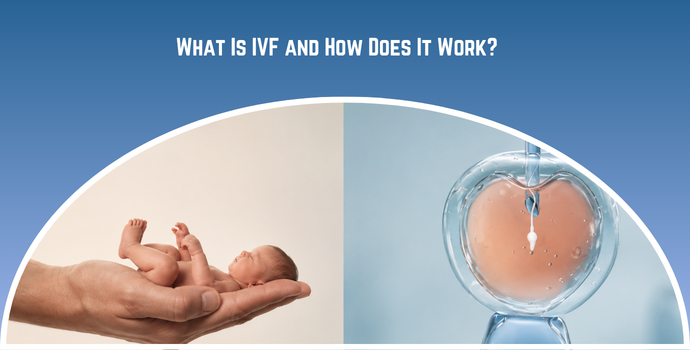
IVF stands for In Vitro Fertilisation, literally meaning fertilisation in glass. Eggs come out of the ovaries, sperm meets them in a lab dish instead of inside the body and the best embryo goes back into the uterus a few days later. That’s the core of it. What people don’t expect is everything around those steps. Hormone injections for nearly two weeks, egg collection under sedation, days of waiting while the lab watches the embryos divide, then a five-minute transfer and two weeks before a blood test tells you anything. It’s been around since 1978, over ten million babies born through it, and it’s still the most effective fertility treatment there is.
According to Dr. Hrishikesh Pai, one of the leading IVF Doctor in Delhi, “People hear IVF and think it’s one big procedure. It isn’t. It’s a sequence of smaller steps, each one built on the last, and each one adjusted to what that specific patient needs.”
What happens at each stage of IVF?
The whole thing runs about four to six weeks before the pregnancy test. Some stages take days. Some take minutes. Here’s the breakdown.
|
Stage |
What happens |
Timeline |
|
Ovarian stimulation |
Daily hormone injections to grow multiple eggs instead of the usual one |
10-14 days |
|
Monitoring |
Ultrasounds and blood tests to track how the follicles are growing |
Throughout stimulation |
|
Trigger shot |
One final injection that matures the eggs and locks in the timing |
34-36 hours before retrieval |
|
Egg retrieval |
Eggs collected from the ovaries with a needle guided by ultrasound, you’re sedated |
15-20 minute procedure |
|
Fertilisation |
Eggs meet sperm in the lab, or sperm gets injected directly into each egg if ICSI is needed |
Same day as retrieval |
|
Embryo culture |
Embryos sit in the incubator, the team watches cell division and grades quality |
3-5 days |
|
Embryo transfer |
Best embryo goes into the uterus through a thin catheter, no sedation for this one |
5-10 minutes |
|
Pregnancy test |
Blood test to check whether the embryo implanted |
10-14 days after transfer |
Not every cycle follows this exact sequence. Some patients freeze the embryos and transfer it in a separate cycle later. Some need ICSI, some don’t. The protocol bends around whatever the diagnosis is. Full details on how each step works at the clinic are on the IVF treatment page.
Who actually needs IVF and what decides whether it works?
It’s not the first thing a fertility doctor reaches for. It’s what comes in when the simpler options can’t get around whatever’s blocking things.
- Tubes that are blocked or gone entirely. If eggs and sperm can’t physically meet inside the body, no amount of timed intercourse or IUI is going to change that. IVF skips the tubes altogether because fertilisation happens in the lab. That’s why it was invented in the first place.
- Severe sperm problems. When count or motility drops too low for IUI, ICSI paired with IVF solves it. One good sperm per egg. That’s all it takes.
- IUI didn’t work. Three, maybe four failed rounds is the usual line. After that, repeating the same thing rarely helps and most doctors will say it’s time to move on.
- Endometriosis that’s gone deep. It distorts anatomy, it damages eggs, it messes with the lining. IVF goes around all of that by retrieving eggs directly and controlling the fertilisation step.
- Getting older, fewer eggs left. After 38 the decline picks up speed. IVF pulls the maximum number of eggs from each cycle and you can test the embryos before transfer, which matters more and more as age climbs. You can’t do that with any other treatment.
- A genetic condition you don’t want to pass on. PGT lets you screen embryos before they go back. That only works with IVF. There’s no equivalent for IUI or natural conception.
What decides whether it works? Age is the biggest single factor. Then embryo quality. Then how the lining responds. Then the lab doing the work. Nobody can guarantee you a result, but the odds are well documented and a straight-talking doctor will show you exactly where your numbers sit before you start. What to do when a cycle doesn’t work is covered in this guide on IVF failure.
Why choose Dr. Hrishikesh Pai?
40 Years, That’s how long Dr. Hrishikesh Pai has been doing this. MD, FRCOG (UK-HON), MSc (USA), FCPS, FICOG. He started the Bloom IVF Group, eight centres now, past 25,000 cycles. Lilavati Hospital in Mumbai. DY Patil in Navi Mumbai. Fortis in Delhi, Gurgaon, Mohali. The labs use Life Whisperer AI to help grade embryos.
He won’t jump to a protocol before the workup is finished. Hormones, imaging, semen analysis, the full picture. Then the plan. Not before.
Book a Consultation with Dr. Hrishikesh Pai If You Want to know what IVF is and how it works.
Frequently Asked Questions
Does IVF hurt?
The daily injections sting a bit, most women get used to them fast. Egg retrieval is under sedation so you won’t feel that. Transfer is quick, barely uncomfortable.
How long is one full cycle?
Four to six weeks. Stimulation takes the bulk of it. The retrieval, culture and transfer happen within about a week after that.
What are the chances it'll work?
Depends heavily on age. Under 35 it’s roughly 40 to 60 percent per cycle. Over 40 the numbers come down and you might need more than one round.
Do most people need multiple cycles?
Plenty of women get pregnant on the first or second try. Some take three or more. The doctor changes the protocol between cycles based on what the previous one showed.
References
- In Vitro Fertilization – StatPearls – NCBI Bookshelf (NLM)
- In vitro fertilization: a review of 3 decades of clinical innovation and technological advancement – National Library of Medicine (PMC)