
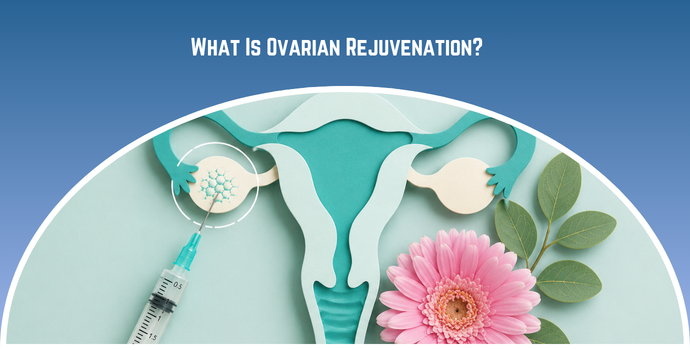
Ovarian rejuvenation is a regenerative approach, most commonly using platelet-rich plasma injected into the ovaries, that attempts to reawaken dormant follicles. The aim is to improve egg quality and yield in IVF for women with diminished ovarian reserve. It is not standard of care yet. Early study results are encouraging, but patients need to understand that this remains experimental.
According to Dr. Hrishikesh Pai, one of the leading IVF Doctor in India, “Ovarian rejuvenation is not a miracle. But for women who have been told nothing else can be tried, PRP gives us something to work with. The early data has been encouraging enough that we cannot ignore it.”
What methods are used in ovarian rejuvenation?
Several approaches have been explored. PRP leads the list with the most published clinical data. The rest are still in early investigation.
|
Method |
How it works |
Evidence level |
|
Intraovarian PRP |
Concentrated platelets from patient’s blood injected into ovaries under ultrasound |
Multiple pilot trials, a few Randomised Controlled Trials |
|
Stem cell therapy |
Bone marrow or adipose-derived cells injected into ovaries |
Very early human trials |
|
Ovarian fragmentation (IVA) |
Cortex strips removed, fragmented, reimplanted |
Limited toPremature Ovarian Insufficiency few centres |
|
Growth factor infusions |
Concentrated growth factors delivered to the ovary |
Mostly animal data |
The PRP procedure takes about 15 to 20 minutes under sedation. Blood is drawn, spun down to concentrate platelets, and the plasma is injected into both ovaries through a transvaginal needle. The growth factors are thought to trigger tissue remodelling, new vessel formation, and follicle reactivation. Straightforward in practice. The science behind why it works is still being mapped. Where this sits within treating female infertility broadly is explained on the female infertility page.
Who is a candidate and what does the evidence show?
This is where we need to be careful with expectations.
Diminished ovarian reserve (DOR) AMH below 1.2 ng/mL, fewer than five antral follicles, poor response to past stimulation. Early studies show improvements in AMH and follicle count after PRP. Controlled trials have been less consistent.
Premature ovarian insufficiency (POI) Ovaries that have stopped functioning before 40. Case reports document cycles returning and pregnancies after PRP, but no large trial has confirmed it reproducibly yet.
Repeated poor IVF response Multiple cycles with very few or no usable eggs despite adequate stimulation. PRP is tried as an adjunct before the next attempt.
What it is not Not a replacement for IVF or standard care. It is tried when conventional options have already been exhausted.
For women weighing what low AMH means for treatment decisions, that is discussed in the guide on low AMH.
Why choose Dr. Hrishikesh Pai?
Dr. Hrishikesh Pai has been practising reproductive medicine for over 40 years now. MD, FRCOG (UK-HON), MSc (USA), FCPS, FICOG. He set up the Bloom IVF Group from scratch and the number has crossed 25,000 ivf cycles at this point, across eight centres. Lilavati Hospital in Mumbai, DY Patil in Navi Mumbai, three Fortis locations in Delhi, Gurgaon and Mohali. The labs have moved to Life Whisperer AI for embryo grading because relying purely on visual assessment under the microscope has its limits.
He is transparent about what ovarian rejuvenation can and cannot deliver at this stage. When it is offered, it is part of a wider plan with realistic expectations set upfront.
Book a Consultation with Dr. Hrishikesh Pai to understand what ovarian rejuvenation is and how it can help revitalize your ovarian function to optimize your chances of pregnancy.
Frequently Asked Questions
Does ovarian rejuvenation actually work?
The honest answer is that uncontrolled studies show improvement in AMH and follicle count after PRP. Controlled trials have been less consistent. It is not proven. It is not baseless either. We are somewhere in between.
Is the PRP injection painful?
Done under sedation, similar to an egg retrieval. Mild soreness afterward for a day or two in most cases.
How soon after PRP can IVF start?
One to three months. The growth factors need time to act on the ovarian tissue before stimulation begins.
Can it bring back periods after early menopause?
There are documented cases of menstrual cycles returning after PRP in premature ovarian insufficiency. It has happened. It is not reliably reproducible yet.
References
- Intraovarian platelet-rich plasma for women with diminished ovarian reserve: a systematic review and meta-analysis – National Library of Medicine (PMC)
- Platelet-rich plasma in reproductive medicine: a critical review of PRP therapy in low-reserve and premature ovarian insufficiency – National Library of Medicine (PMC)