
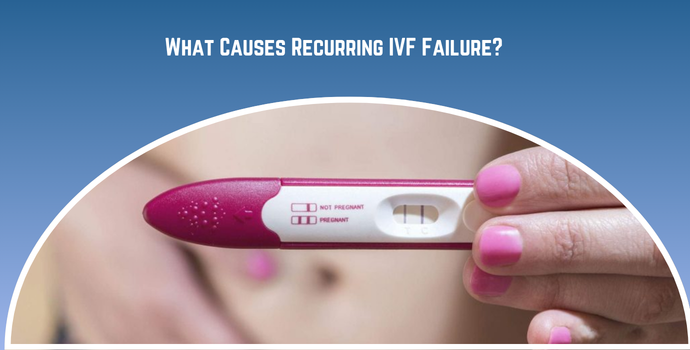
Recurring IVF Failure or Recurrent Implantation Failure (RIF) is defined as three or more failed transfers despite good-quality embryos. It affects roughly 10% of IVF patients. The causes sit across three areas: embryo quality, uterine factors, and immunological issues. Treatment options include PGT-A to screen embryos, hysteroscopy to fix uterine problems, ERA to time the transfer correctly, and therapies like PRP or immune modulation to improve implantation. There’s almost always a reason. Finding it is the job.
According to Dr. Hrishikesh Pai, IVF specialist in Mumbai, “Recurring failure is almost never random; there’s a reason every time, and the investigation after a second failure should be far more thorough than after the first.”
Why Does IVF Keep Failing Despite Good Embryos?
Good embryos failing repeatedly that’s not bad luckSomething is wrong, and it’s usually one of these four thingsSomet imes more than one at the same time.
- Chromosomally abnormal embryos: A blastocyst that grades well on day 5 can still carry chromosomal errors that make implantation impossible. Age makes it more likely, sure, but younger patients get this too. Nobody tells them that upfront.
- Something inside the uterine cavity: Polyps, a small fibroid pressing into the cavity, a septum, old adhesions from a D&C years ago. Any of these will block implantation no matter how good the embryo is.The frustrating part a lot of these only show clearly on hysteroscopy, not a regular scan.
- The window of implantation is shifted: Lining can be 9 mm and look perfect,but if the transfer is happening outside your personal receptivity window it simply won’t work.Most clinics transfer on a standard protocol day without ever checking if that day is actually right for that patient.
- The immune system rejecting the embryo:Elevated natural killer cells, antiphospholipid antibodies,clotting disorders More common in recurrent failure cases than people expect.And treatable, once someone actually tests for them.
The investigation is what needs to change after two or three failures not just the medication doses. The repeated IVF failure page covers the diagnostic approach in full.
What Tests and Treatments Actually Make a Difference?
Depends on what the investigation finds. But these are the ones that change outcomes most consistently.
- PGT-A embryo testing: Tests embryos for chromosomal abnormalities before transfer. If abnormal embryos have been going in cycle after cycle, this stops that immediately. Not every patient needs it. After recurrent failure, most do.
- ERA test: Finds your actual implantation window. Some women have it shifted by 12 or even 24 hours from the standard protocol. You’d never know unless you tested. But transfer on the wrong day and it won’t work doesn’t matter how perfect everything else is.
- Hysteroscopy: Goes inside the cavity directly. Finds things ultrasound misses. Small polyps, thin adhesions, minor irregularities small findings that turn out to be the whole reason.
- Immunological treatment: Once elevated NK cells or a clotting condition is confirmed, low-dose steroids, heparin,or intralipid infusions go into the next protocol. Real results in the right patients. But you can’t treat what you haven’t tested for first, and a lot of clinics skip the testing.
Running the same protocol a fourth time isn’t a plan. It’s hope. Most couples who eventually succeed after recurrent failure did so because someone finally changed what they were investigating not just what drugs they were using.The blog on natural pregnancy after failed IVF is worth reading if you’ve been through multiple cycles already.
Discover Smarter Fertility Solutions for Better IVF Outcomes Book Appointment with Dr. Hrishikesh Pai for personalized risk assessment.
Why Choose Dr Hrishikesh Pai?
Dr. Hrishikesh Pai has 40+ years in reproductive medicine, MD, FRCOG (UK-Hon), MSc (USA), FCPS and FICOG qualifications, and 25,000+ IVF cycles completed at Bloom IVF Group clinics. ERA testing, PGT-A protocols, immunological workups — these aren’t add-ons here. They’re standard for recurrent failure cases.
Patients who come in after repeated failures elsewhere don’t get handed a new protocol on day one. They get a full case review first. What was done, what wasn’t, what the results actually showed.That’s the difference.
FAQs
How many failed IVF cycles count as recurrent implantation failure?
Three or more failed transfers with good-quality embryos typically defines it.
Can recurring IVF failure be treated successfully?
Yes, most cases have an identifiable cause and respond well once properly treated.
Is PGT-A recommended after multiple IVF failures?
Yes, it screens embryos for chromosomal errors that prevent implantation.
What is the ERA test and when is it used?
ERA maps your personal implantation window when standard transfer timing has repeatedly failed.
Disclaimer: The information shared in this content is for educational purposes only and not for promotional use.
Reference:
- Coughlan C et al. — Recurrent Implantation Failure: Definition and Management — Reproductive BioMedicine Online
- ESHRE — Recurrent Pregnancy Loss Guideline 2023