
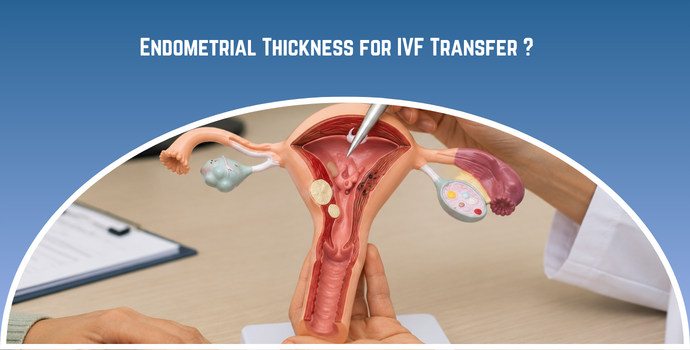
The endometrial lining needs to be thick enough for an embryo to implant and sustain a pregnancy. In IVF, the accepted minimum is 7 mm, but most pregnancies occur when the lining measures between 8 and 12 mm. Below 7 mm the implantation rate drops sharply. The thickness is measured on ultrasound, usually on the day of trigger or before a frozen transfer, and it directly influences whether the cycle proceeds or gets postponed.
According to Dr. Hrishikesh Pai, one of the leading IVF Doctor in Delhi, “A good embryo placed into an unprepared lining is a wasted opportunity. We measure the thickness, we assess the pattern, and we do not transfer until both are where they need to be.”
What thickness does the lining need to reach?
Most of it traces back to what is happening at a cellular level inside the egg. Pattern on ultrasound matters too. A trilaminar appearance is considered the most receptive. But thickness is what every clinic checks first.
|
Thickness |
What it means |
Clinical implication |
|
Below 6 mm |
Too thin for transfer |
Cycle usually cancelled or postponed |
|
6 to 7 mm |
Borderline |
Transfer may proceed with caution, lower success rates |
|
7 to 8 mm |
Minimum acceptable |
Pregnancy possible, not optimal |
|
8 to 12 mm |
Optimal range |
Highest implantation and live birth rates |
|
12 to 14 mm |
Still favourable |
Good outcomes, no concern |
|
Above 14 mm |
Requires evaluation |
Rule out polyps, hyperplasia or fluid |
Data from over 2,000 IVF cycles shows pregnancy rates climbing from roughly 17% when the lining sits below 7 mm to over 44% once it crosses into the optimal range. There is no single number that guarantees success, but below 7 mm the odds fall off steeply. Most clinics want 8 mm and above before they will proceed. How the lining is prepared in a frozen cycle is detailed on the frozen embryo transfer page.
What causes a thin lining and how is it managed?
A thin endometrium is one of the more frustrating problems in IVF because it does not always have an obvious cause, and standard treatment does not always fix it.
Inadequate estrogen exposure The most common reason. In a natural cycle, estrogen from the growing follicle drives lining growth. In a medicated frozen transfer, tablets or patches do the same job artificially. When the lining still does not respond, deeper investigation is needed.
Endometrial damage from prior procedures Repeated D&Cs, uterine infections or previous surgical trauma can leave adhesions or scarring that physically prevents the lining from growing. Asherman syndrome is the severe end of that spectrum, and hysteroscopy is usually needed to diagnose and treat it.
Poor uterine blood flow Uterine artery perfusion plays a bigger role than many patients realise. Low-dose aspirin, vitamin E, sildenafil and L-arginine have all been used to improve endometrial vascularity, though the evidence varies in strength.
PRP and G-CSF for refractory cases When standard estrogen therapy fails, platelet-rich plasma injected into the uterine cavity can stimulate local tissue growth. G-CSF has shown promise in small studies for women whose lining stays below 7 mm despite maximum estrogen. Neither is standard of care yet, but both are increasingly used in clinical practice.
The practical steps for building up a thin lining before IVF are covered in the guide on increasing endometrial thickness for IVF.
Why choose Dr. Hrishikesh Pai?
Dr. Hrishikesh Pai has been practising reproductive medicine for over 40 years now. MD, FRCOG (UK-HON), MSc (USA), FCPS, FICOG. He set up the Bloom IVF Group from scratch and the number has crossed 25,000 cycles at this point, across eight centres. Lilavati Hospital in Mumbai, DY Patil in Navi Mumbai, three Fortis locations in Delhi, Gurgaon and Mohali. The labs have moved to Life Whisperer AI for embryo grading because relying purely on visual assessment under the microscope has its limits.
No transfer gets scheduled until the lining meets the threshold. If it does not respond to standard preparation, the cycle is adjusted rather than forced.
Book a Consultation with Dr. Hrishikesh Pai to understand how endometrial thickness can impact IVF transfer success and what can be done to optimize your chances of pregnancy.
Frequently Asked Questions
What is the minimum endometrial thickness for embryo transfer?
Seven millimetres is the cutoff most clinics work with. Below that, the odds of implantation drop enough that postponing the transfer is usually the safer call.
Can a thin lining be improved?
Often, yes. It depends on why it is thin. Estrogen adjustment, blood flow support, PRP or G-CSF are all options, but the approach has to match the cause.
Does endometrial pattern matter as much as thickness?
A trilaminar pattern on ultrasound signals better receptivity. Two patients can have the same thickness and very different outcomes based on whether that pattern is present.
Is a very thick lining a problem?
Anything above 14 mm needs a closer look. Polyps, fluid or early hyperplasia could be behind it, and all three need to be ruled out before proceeding with transfer.
References
- Endometrial thickness and live birth rates after IVF: a systematic review – National Library of Medicine (PMC)
- Endometrial thickness affects the outcome of IVF-ET in normal responders after GnRH antagonist administration – National Library of Medicine (PMC)